
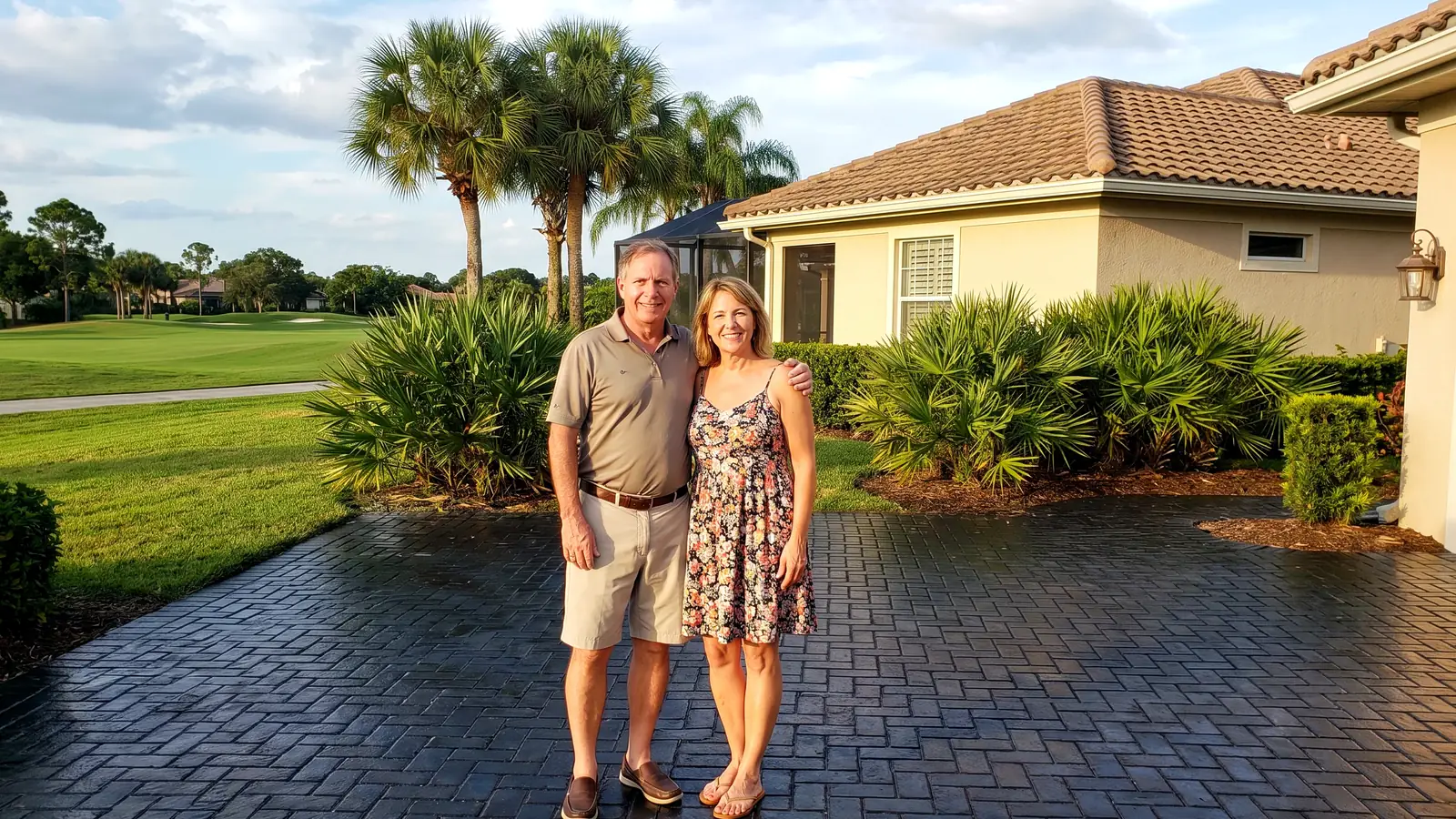
Paver sealing for Bloomingdale homes
Paver Sealing in Bloomingdale, FL
Bloomingdale's 1980s driveways have seen a lot of rain, and (941) 207-3631 gets you a free paver sealing estimate.
- Brings out deeper paver color
- Fresh joint sand helps lock pavers in place
- Gives weeds less room to grow
- Makes the surface easier to keep clean
- Free estimate, no obligation
Request a Free Estimate
Free, no obligation.
Fast, careful paver sealing in Bloomingdale
A free look from a local contractor is the first step to paver sealing in Bloomingdale. The contractor then washes, re-sands and seals your driveway, patio and walkways. After you request a free quote, check your phone, because replies land within 1 business day, usually much sooner.
Maybe your driveway was laid when the house went up in the 1980s or 1990s and has been through a few coats of sealer since, or none at all. Either way, the color has probably drifted, and the joints may have thinned. If that sounds like your driveway, call (941) 207-3631.
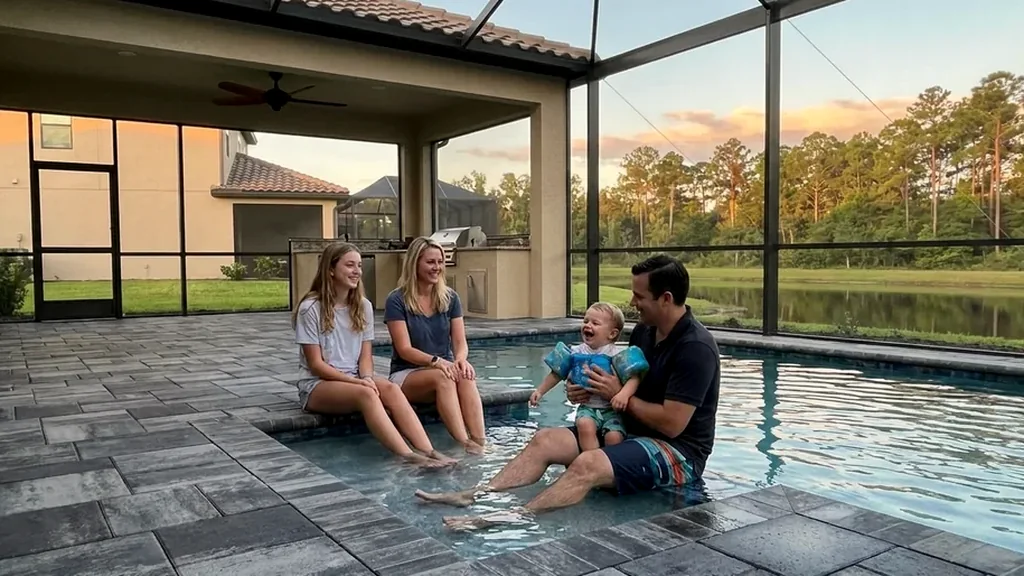
Why hire a local paver sealing contractor in Bloomingdale?
Bloomingdale's 32 subdivisions came from more than 5 developers, so the driveway next door may be older or younger than yours. A local contractor can tell, and to start, request a free quote.
Old driveway, plain answers
Many Bloomingdale driveways date to the 1980s. The contractor tests the old coat and tells you what the surface will take.
HOA rules respected
Sixteen subdivisions here have mandatory HOAs. Bring yours, and ask the contractor for product sheets to show the board.
A yardstick for bids
Published prices for the region run $1 to $3 per square foot, covering the wash, sand and sealer.
Your choice of date
Storm season ends October 10. Choose a day, and the contractor fits the work around the weather.
Get Your Free Estimate in Bloomingdale
Tell us about your pavers in Bloomingdale.
Free, no obligation
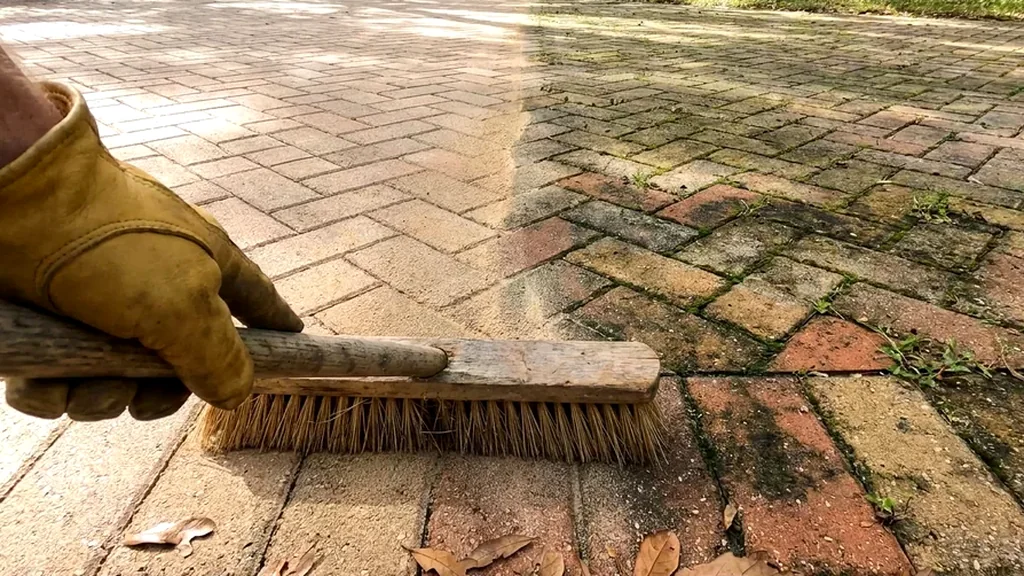
What paver problems show up most in Bloomingdale?
Old sealer of unknown type
Nearly 4,000 Bloomingdale homes went up between 1979 and 1989, and many have changed hands since. A driveway may have been coated by an owner you never met. Water-based sealer cannot go over solvent-based sealer, so the contractor has to identify what is on there before choosing a product. If you do not know who sealed it last, say so at the estimate. The contractor can test a small spot and tell you what the surface will take. Ask neighbors on your street whether they know who coated theirs, since they may know what was used. A small test patch on a corner usually answers the question before the quote is final.
Thin joints and weeds in older driveways
A paving group says lost joint sand can widen joints, letting soil in and encouraging weeds. Older driveways have had many years of rain, mowing edges and hose spray to wear sand away. Fresh sand is part of the job, which means weeds are dealt with before sealing, not after. A quick look at the edges and the low corners shows how far the sand has dropped. Topping off the joints before the coat also helps the sealer sit evenly across the surface. Check the edges beside the lawn first, where gaps tend to open. Check the edges beside the lawn first, where gaps tend to open.
Heavy summer rain on sandy ground
Myakka sand, the most common soil in Hillsborough County, lets water through quickly. The National Weather Service puts the rainy season at May 25 to October 10, with showers and storms almost every day. Rain like that can wash sand from the joints, so a spring check matters. Walk the drive after a storm and note where the water runs. Puddles that linger point to low spots where sand and soil collect, and those spots get the most attention. Look for puddles that last a day after storms, which point to low, sand-starved spots. Slow drying under trees is normal, and the contractor builds that time into the day. Ask how the contractor handles low spots near downspouts, since water gathers there.
Green film under mature trees
Bloomingdale's oldest streets date to 1979, and trees planted then have had decades to grow. The paving group says moss and algae form mainly where shade is heavy. Pavers under a big canopy dry slowly, so those spots get a closer wash and more time to dry before sealing. Leaf stains and mildew often show up first on the shaded side of the house. A contractor can wash them away, though the shade itself will keep drying slow. Trim what you can, since light and air help pavers dry. Light pressure is enough for most film, and it protects the sand left in the joints.
Fade and wear near the road
Driveway aprons near the street take the most tires, turns and sun. The paving group notes that prominent entrance areas often need professional cleaning. Wear shows first in these spots, which means they are the ones to point out at the estimate. Mention any spot where the car always turns or parks. A contractor can plan extra care there, since it is where the sealer will work hardest. Mark the spots where tires turn, so the contractor can give them a closer look. Wear on the apron is normal for a driveway that gets daily use.
Do Bloomingdale's HOAs and deed rules affect which paver sealer I can use?
They can, so check your own rules first. Bloomingdale has 32 subdivisions, with 16 voluntary homeowner associations and 16 mandatory ones, and today only the mandatory associations' deed restrictions are active. A paver company that works nearby lists HOA rules on finishes and sand colors as a common issue. To ask a contractor what to bring to your HOA, request a free quote.
The neighborhoods grew in layers. Construction began in March 1979 east of Bell Shoals Road at Bloomingdale Pointe, nearly 4,000 homes followed by 1989, and Erindale Oaks closed out development in 2013. That means one street can hold pavers from 1979 while the next holds much newer ones, so call (941) 207-3631 and say when your home was built.
Bloomingdale has an 18-hole Golfer's Club, a community sports complex, the Campo Community YMCA and a public library beside Bloomingdale High School. The median age is 41.8, and 16.6 percent of residents are 65 or older. If you would rather leave the heavy work to someone else, request a free quote and ask for a plain written scope.
What does paver sealing cost in Bloomingdale?
A Bloomingdale lot with a wide drive, a walkway and a back patio adds area quickly, so measure first. Published prices in Southwest Florida run $1 to $3 per square foot to clean, sand and seal. Put the total in writing, and request a free quote for your figure.
The price shifts with how much sand the joints need, how long old sealer takes to identify, how shaded the surface is and how many surfaces you list. A solvent-based coat on the surface means no water-based sealer over it. To tell the contractor what your pavers look like, call (941) 207-3631.
| Paved area | Typical example | Clean, sand and seal |
|---|---|---|
| 300 sq ft | Small patio or walkway | $300 to $900 |
| 600 sq ft | Two car driveway | $600 to $1,800 |
| 1,000 sq ft | Large driveway or pool deck | $1,000 to $3,000 |
| 1,500 sq ft | Driveway plus pool deck | $1,500 to $4,500 |
Math based on the $1.00 to $3.00 per square foot that Southwest Florida paver companies publish. Your contractor sets the actual price after seeing the surface. Repairs, leveling and stripping failed sealer are usually extra.
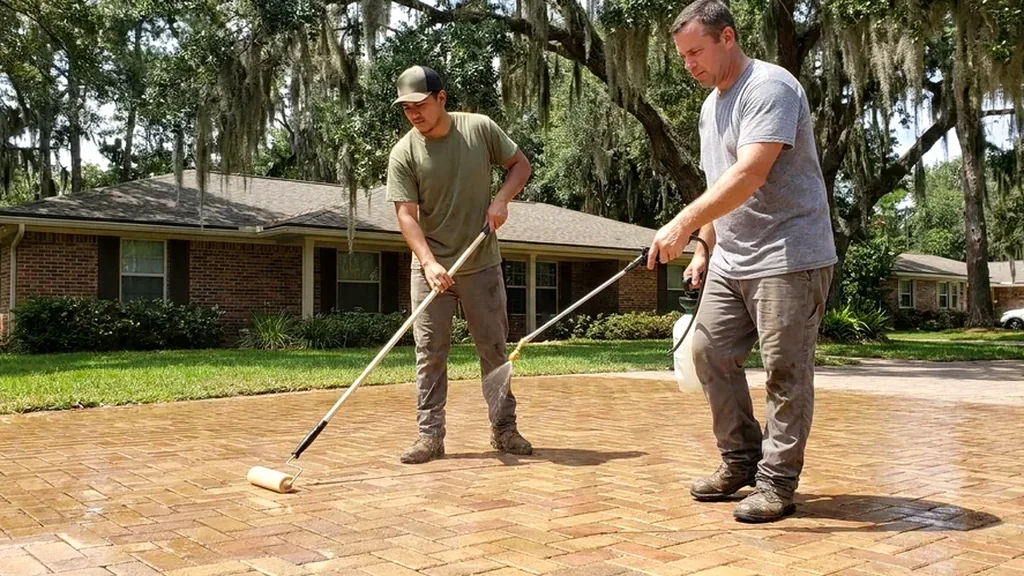
How does a paver sealing job work in Bloomingdale?
Inspect and test
The contractor measures the drive, patio and walks, then studies color, joints and any old sealer. A small test of the old coat helps pick a product. Sunken pavers are marked for repair. You receive a written total. Because many Bloomingdale homes date to the 1980s, ask whether a previous owner coated the drive. The visit is a walk and a tape measure, and you can ask anything along the way. Every surface gets a tape measure, so the quote is based on actual square feet.
Wash under the trees
The wash lifts dirt, green film from shady stretches and oil by the garage. Pressure stays low to keep sand in the joints. Stains and rust are treated before any sealer, since the coat would hold them. Weeds along the apron and edges come out at this stage, before new sand goes in. Leaf stains, algae and mildew all come off with the same careful pass.
Rebuild the joints
Joints are refilled and swept after washing removes the sand. Older Bloomingdale driveways can take more sand than expected. The contractor checks the low corners by hand. A paving group says lost joint sand lets soil in and weeds follow, so full joints are worth the extra sand. If an edge restraint has shifted, the contractor points it out before sand goes in.
Dry time and day pick
Pavers dry all the way, with shaded spots last. In the rainy season the day may move. The contractor checks the forecast, and you sign off on the date. You are told the plan the day before, so nothing surprises you. A morning start may wait for dew to burn off.
Spray, roll, record
A Central Florida company says many pros spray, then back-roll, because spraying reaches joints and rolling smooths extras. Too much sealer can turn cloudy or sticky, so thin and even is the goal. Hold on to the product name for later. If your HOA wants a color or finish on record, ask for the product sheet now. Ask for a copy of the product sheet, since some HOAs ask to see it.
Complete paver services in Bloomingdale
Most Bloomingdale driveways are decades old, so sealing often means undoing earlier work as much as adding to it. The contractor tests what is on the surface, washes it clean, rebuilds the joints and lets everything dry. Only then does new sealer go on. To plan yours, request a free quote.
Make a list before you call: the driveway, the walk, a patio, maybe a pool deck. Every surface wears its own way, so each gets a separate check on sand and sealer. One quote can cover the whole lot and save a second trip. Call (941) 207-3631 with that list.
Your old coat decides what goes next, since water-based sealer cannot go over solvent-based. Looks come second, with matte hiding scuffs and wet look showing them sooner. If you live in a mandatory HOA, bring its rules along when you request a free quote.
Plan around storm season, which the National Weather Service dates from May 25 to October 10, and keep in mind that pavers must be dry when sealer goes on. Some owners choose a drier month, though a clear summer week can also work. Call (941) 207-3631 to ask which dates are open.
Questions to ask before you hire
- Can you match the existing color if parts of my driveway have faded unevenly?
- Will the sprinklers need to be off, and for how many hours?
- Do you send a written scope that lists each step and each product?
- Can you work around my screen enclosure and potted plants?
- Will the sealer leave a glossy wet look, or can I choose a natural matte finish?
- How soon after my call can someone look at the job and give a number?
- What happens to the weeds and moss growing between my pavers before sealing?
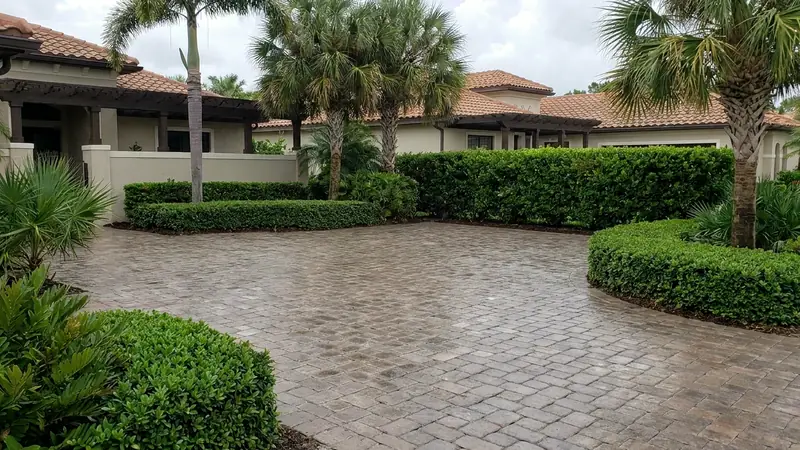
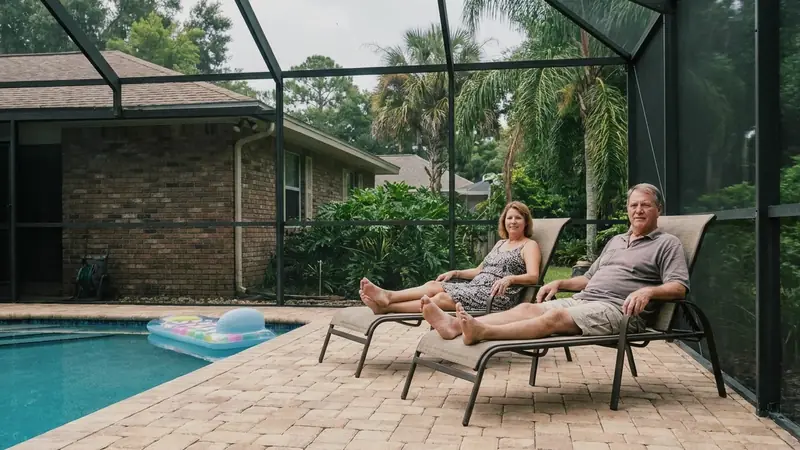
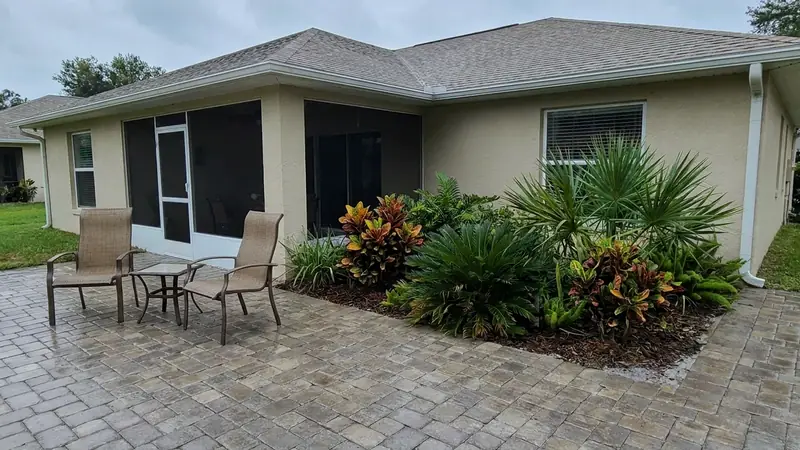
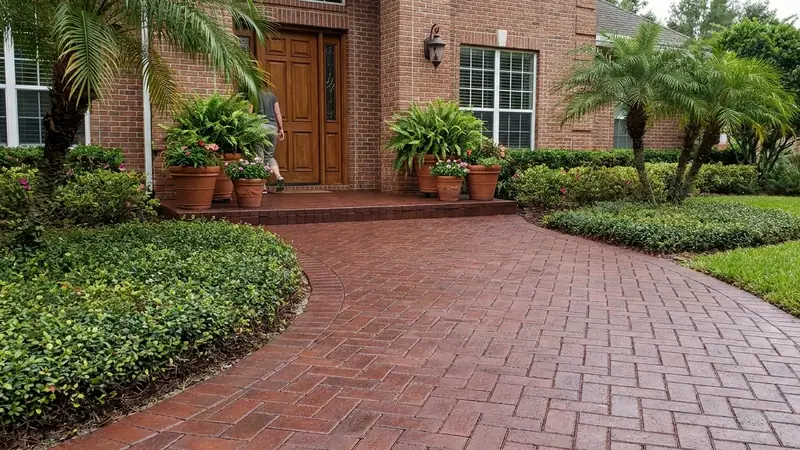
What do sealed pavers look like around Bloomingdale?
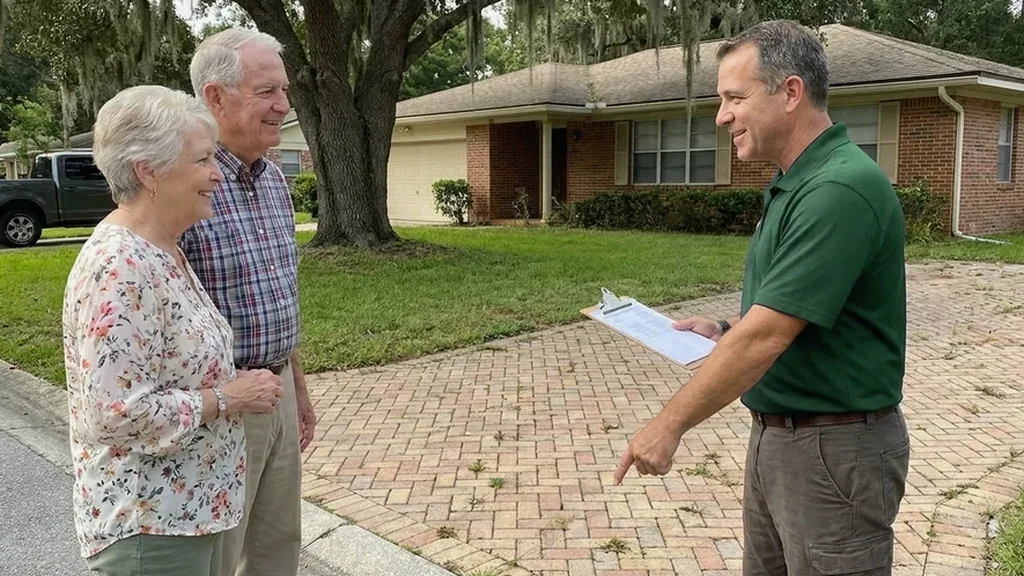
Why local matters in Bloomingdale
More than 5,000 homes sit between Brandon and FishHawk in Bloomingdale, and conditions vary by block. A driveway near the Alafia River and one beside the Golfer's Club may not behave alike. A contractor who works here has seen both, so request a free quote for a free look.
Dozens of deed restriction documents and 32 subdivisions mean rules shift from street to street. Ask for the product name and finish in writing, which gives your HOA something to review. A local contractor will not be surprised by that request. Call (941) 207-3631 to talk about your street.
Pavers laid in the 1980s may need old sealer identified and joints rebuilt, and newer ones may need only a wash and a coat. A local contractor can usually tell which you have at a glance, and the choices stay yours. To start, request a free quote.
What is Bloomingdale's story, and what is nearby?
Bloomingdale was settled before 1850 by John Vickers, John Carney and others, and its grade school opened in 1884, with a teacher's institute following in 1897. The post office closed in 1910, and the community stayed small until the 1960s, when it became a bedroom community for Tampa. Then came the building boom that started in 1979, and if you want your driveway to look as new as the neighborhood, request a free quote.
Today the area has the Alafia River along its south edge, where Bell Shoals form rapids, and the 4,070-acre Alafia River Corridor Nature Preserve just upstream. Bloomingdale High School opened in 1987, and the Campo Community YMCA sits within the community. When you want a straight answer on your pavers, call (941) 207-3631.
Frequently Asked Questions
How soon should pavers in Bloomingdale be resealed?
In Bloomingdale as elsewhere, quoted gaps between coats run from two to five years. A shaded Bloomingdale driveway under mature trees may lean toward the shorter end. A paving group suggests checking the joints each spring, and low sand is the sign to act. Keep the date of the last coat. Photograph the finished driveway, so you can compare it next spring.
Is it better to spray or roll paver sealer in Bloomingdale?
A Central Florida paver company calls spraying the usual first step on larger surfaces, then back-rolling to even things out. Spraying reaches the joints, while hard rolling can pull sand out of them. Pick a contractor who will explain the method before work starts. The right choice depends on the paver and the sealer, which is why the contractor explains it first.
How much does it cost to seal pavers in Bloomingdale, Florida?
Southwest Florida companies commonly publish $1 to $3 per square foot, covering the wash, sand and sealer. Old sealer, thin joints and shade push a Bloomingdale job higher. Get measured square feet in writing and compare quotes on that basis. A larger lot costs more in total, but the rate per square foot stays inside the same range.
What are the downsides of sealing pavers in Bloomingdale?
The downsides are upkeep and timing. Sealer wears down and needs another coat later, and wet look shows scuffs before matte does. It also needs a dry surface, so a rainy week or a shaded corner can push the date back. None of these is a reason to skip it, but they are good to know before you book.
Do I need HOA approval to seal pavers in Bloomingdale?
It depends on your subdivision. Bloomingdale has 16 mandatory HOAs, and their deed restrictions are active. A paver company that works nearby says it can supply product information and a written scope, so ask your HOA what it wants before you pick a finish. Bring that scope to your HOA, since the finish and sand color are the usual questions. Bring that scope to your board, since finish and sand color are the usual questions.
Can new sealer go over old sealer on my Bloomingdale pavers?
Sometimes not, since water-based sealer cannot go over solvent-based. Someone has to identify the old product first, which is tricky on a home that has changed owners. Keep receipts or product names if you have them. If nobody knows, a small test area can settle the question.
Does the rainy season stop paver sealing in Bloomingdale?
Not entirely, but it shapes the calendar. A wet stretch can delay the job because sealer needs a dry surface, and the National Weather Service dates this area's rainy season from May 25 to October 10. Contractors choose clear days and confirm with you. Contractors confirm the day with you before arriving.
Who handles the sealing in Bloomingdale, and what does a quote cost?
A local contractor does all the washing, sanding and sealing. An estimate costs nothing and binds you to nothing. Replies arrive within 1 business day, often much sooner than that. Tell the contractor about weeds, stains or old sealer so the quote matches your pavers. Give your subdivision's name on the call, and the contractor can check what rules apply.
Ready for a Free Estimate in Bloomingdale?
Call (941) 207-3631 and tell us about your pavers.
Free, no obligation